If Your Roof
Sheds Rain Within Hours
Pitched panels that dry quickly after a storm give acrylic the conditions it needs to last for years.
Start WithAcrylic Over Primed Steel
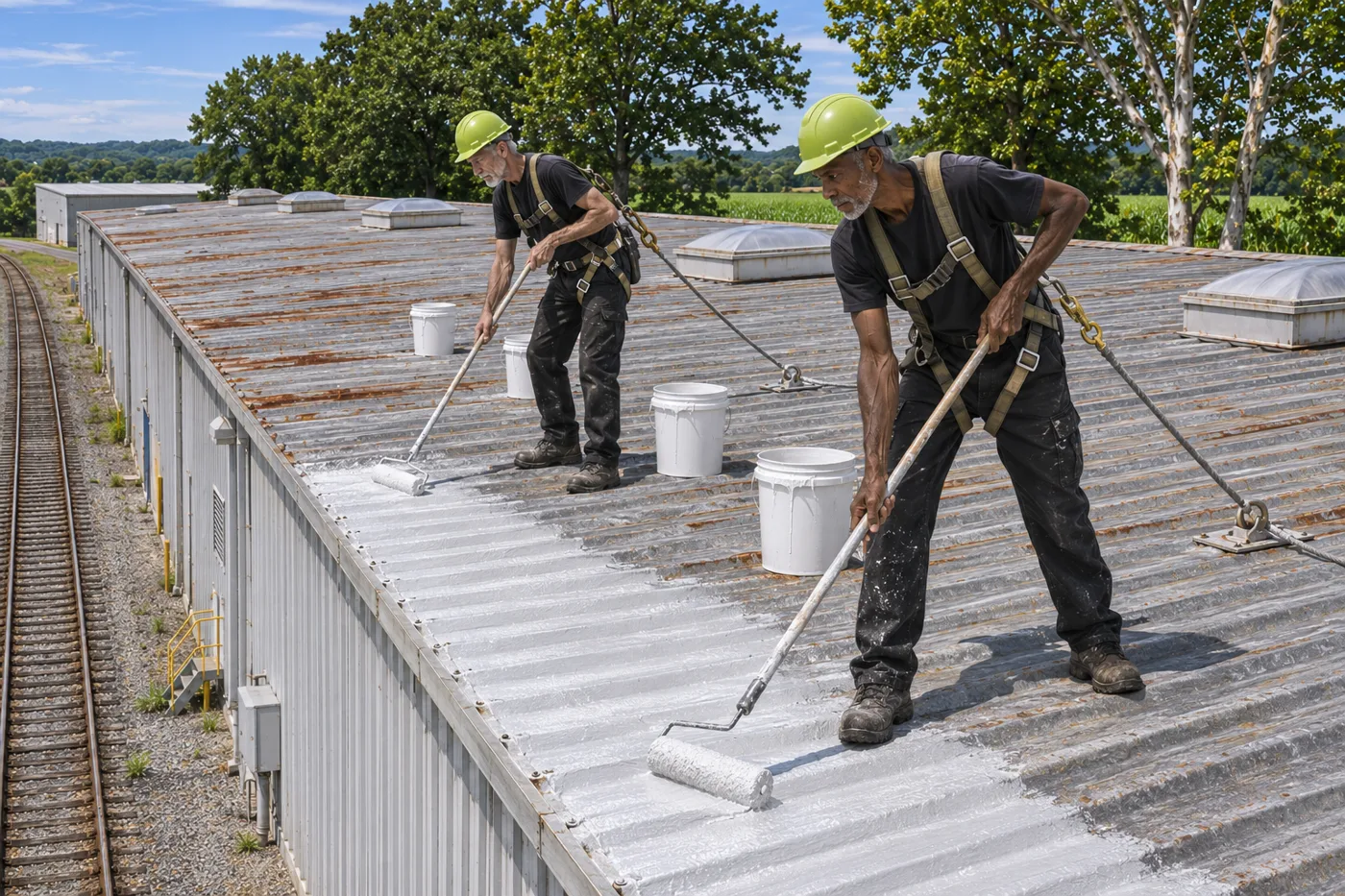
As an Evansville acrylic roof coating contractor, we roll and spray acrylic coats over cleaned, primed metal roofs that drain well, timing each coat around dew and rain.
An Evansville acrylic roof coating fits sloped roofs that shed water fast. These cases show where it fits and where it steps aside.
Pitched panels that dry quickly after a storm give acrylic the conditions it needs to last for years.
Chalky factory paint over tight screws and laps is a direct acrylic job once the roof is washed.
An older acrylic coat in fair shape takes a fresh acrylic layer after cleaning and spot repairs.
Water that stands softens acrylic over time, so flat spots need silicone or better drainage there.
Acrylic lasts on a roof that is clean and tight. These are the repairs that come first.
Sun breaks down factory finishes over the years until they turn powdery and stop protecting the steel underneath.
Pressure washing strips the chalk so primer and acrylic grip clean, firm paint.
Washers shrink and crack, and the gaps they leave open wider with every swing from summer heat to winter cold.
New screws with fresh washers go in, and each head gets mastic before the coating.
Panels move every day as the sun heats them, and laps open a little more each year.
Laps get stitch screws and polyester fabric set into a first acrylic pass.
Scratches and worn spots let moisture reach the steel, and rust stains spread outward from each one.
Rust is cleaned to firm metal and spot-primed with a rust-inhibiting primer.
Water that sits on acrylic rewets it, and over time the film softens and lifts in that area.
Low spots get drainage fixes or a silicone area so the acrylic stays on surfaces that dry.
Acrylic covers well-drained slopes. The other systems handle the areas acrylic should skip.
| System | Where It Fits | Check First |
|---|---|---|
| Commercial Metal Roof Coating | Steel roofs needing heavy screw, lap, and rust repair first | Rust depth at laps and eaves |
| Silicone Roof Coating | Flat sections that pond after storms | Wet insulation under the puddles |
| Acrylic Roof Coating | Sloped panels that drain within hours | Dew point and the rain forecast |
| Spray Foam Roofing | Buildings that need insulation added under the roof | Wind and nearby cars on spray days |
| Shingle Roof Coating | Firm shingled sections on the same building | Granule loss and maker guidance |
What changes on a sloped metal roof after washing, repairs, and two acrylic coats.
Chalky paint and leaking screws are an acrylic job when the roof drains well. Call, and we will check yours.
Five steps, with each coat timed to the weather.
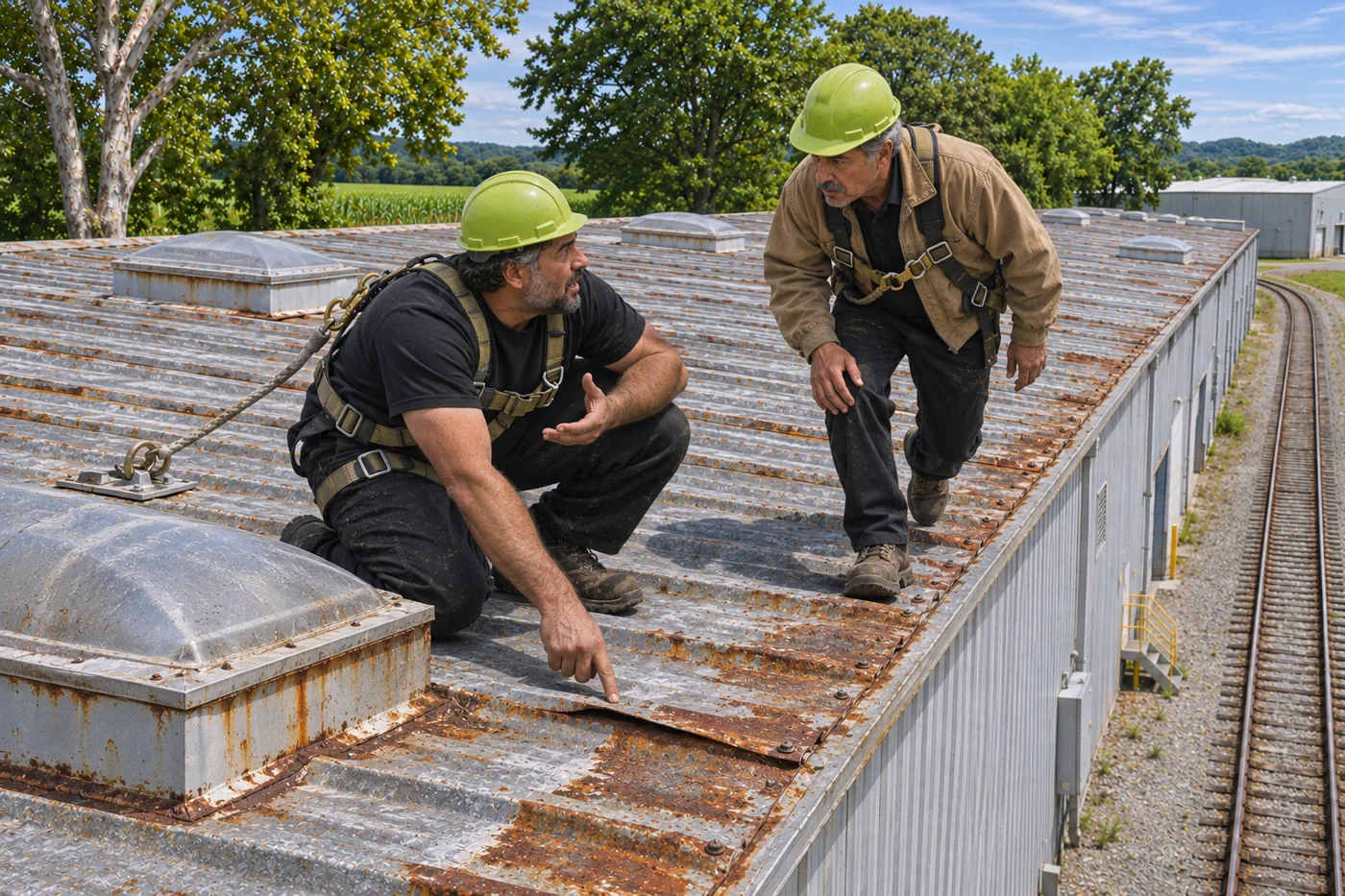
We check slope and drainage, test screws, probe rust, and look for any old silicone that would rule acrylic out.
Pressure washing removes chalk, dirt, and loose paint, and the roof dries fully before any primer goes on.
Screws are replaced, laps stitched, and fabric is set into the first coat at laps, curbs, and edges.
The first full coat goes on in the warm, dry part of the day, with time to dry before evening dew.
A second coat in a contrasting color shows full coverage, and the final walk checks the thickness.
Wet or insulated parts of a roof can need a different service.
Steel roofs where heavy screw, lap, and rust work comes before the coating.
Flatter sections that hold water after storms.
Leaky roofs over buildings that need insulation as well.
Shingled offices and entry wings on the same property.
Answers owners want before an acrylic job.
Acrylic grips clean, primed steel and stretches as panels grow in summer heat and shrink in winter. It reflects sunlight and recoats easily, and it lasts longest on sloped roofs that shed water quickly.
Most jobs take two or more coats to reach the dry film thickness on the product sheet, often in contrasting colors so gaps show. Each coat dries before the next, and laps and screws get fabric or mastic first.
On warehouse roofs with good slope it works well. River humidity stretches drying time, and rusted laps need primer first. Flat sections that hold water after storms take silicone instead, so some warehouses end up with both.
Water-based acrylic dries as its water evaporates. Warm, dry, breezy days cure it fastest, while cool, humid days and dew slow it. We apply in the warmer part of the day and check forecasts for rain.
Surface and air temperatures have to stay above the maker's minimum through the drying period of each coat, so winter jobs wait for a mild stretch or move to spring.
White and light grays reflect the most heat off the roof. Some makers offer tan and other colors, and we confirm the color with you before ordering.
Leaking screws get replaced and capped first, because acrylic stretches over a sealed screw head but splits over one that keeps moving.
Tell us about the slope and the leaks, and we will set up a roof walk.