If Your Roof
Has Exposed Screws on Every Rib
Ribbed panels with backed-out screws and hardened washers are the classic candidate for the full metal coating system.
Start WithFull Metal Coating System
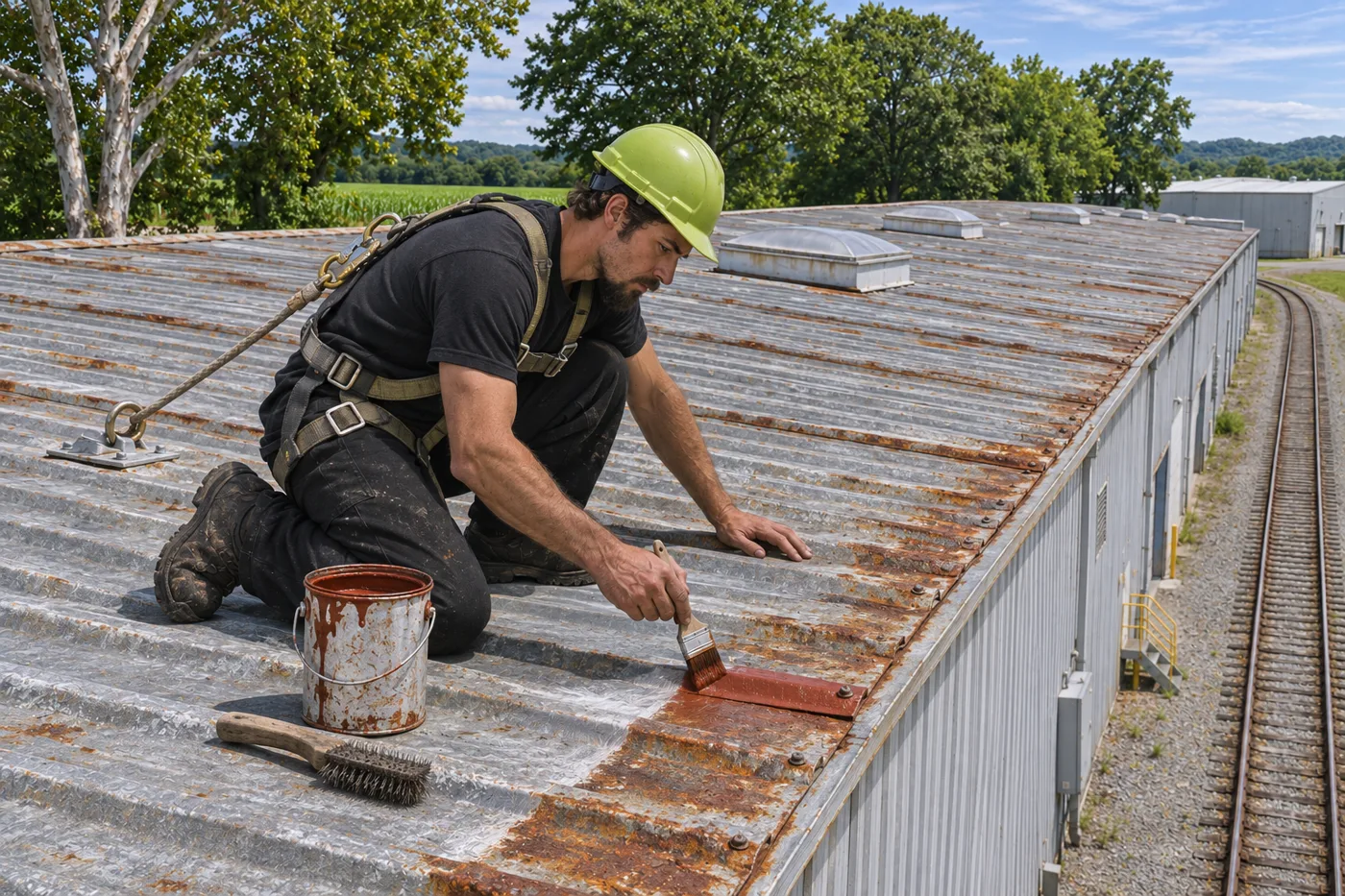
As an Evansville commercial metal roof coating contractor, we replace failed screws, seal laps and curbs, prime rust, and coat steel roofs on plants and warehouses.
An Evansville commercial metal roof coating job fits most steel roofs with firm panels. These four cases show where it fits and where other work comes first.
Ribbed panels with backed-out screws and hardened washers are the classic candidate for the full metal coating system.
Seams that have lifted at clips or end laps get re-secured, taped, and coated along with the rest of the roof.
A flatter addition that ponds takes silicone, while the steeper main roof takes the metal system in the same scope.
Widespread holes through the steel need new panels, or foam over a firm deck, before any coating goes on.
Each of these problems gets repaired before the first coat goes on the roof.
Rows of screws with cracked washers let water in at each hole, and the drips follow the purlin line across the ceiling inside.
We replace every failed screw, step up a size where holes have worn, and cap each head with mastic so the coating has a firm base.
Thermal movement between hot afternoons and cold nights works end laps open and pulls old sealant away from the steel.
Stitch screws close the lap, butyl tape seals it, and polyester fabric set into the base coat reinforces the joint.
Eaves stay wet longest after rain and dew, so the factory paint gives out there before anywhere else on the roof.
Loose rust is ground back to firm steel, rust primer goes on, and rotted gutter sections are replaced with new ones.
Heat and vibration from rooftop units crack the sealant that different trades applied over the years.
Old sealant is cut away, and each curb gets a single fabric-reinforced detail that matches the coating system.
Water runs along panel ribs and purlins before it drips, so the stain often sits several feet from the opening.
We trace each stain upslope, mark the source on the roof sketch, and repair it with the rest of the roof.
Five systems cover the roofs we coat. On steel roofs the metal system leads, with the others used on sections that need them.
| System | Where It Fits | Check First |
|---|---|---|
| Commercial Metal Roof Coating | Ribbed and standing seam steel roofs with firm panels and leaking screws | Screw grip and how deep the rust runs at laps |
| Silicone Roof Coating | Flatter sections that still hold water two days after storms | Moisture in the insulation under the ponding areas |
| Acrylic Roof Coating | Steeper metal panels that shed rain within hours | A dry forecast and low dew for each coat |
| Spray Foam Roofing | Leaky roofs over buildings that also need insulation | Wind, parked cars, and air intakes nearby |
| Shingle Roof Coating | Shingled office fronts or church wings on the same property | Shingle condition and the maker's guidance |
What changes on a steel roof when the metal system goes on over finished repairs.
Fastener rows are where most metal roofs leak first. Call, and we will check them and price the repairs with the coating.
Five steps, in the same order on every steel roof we coat.
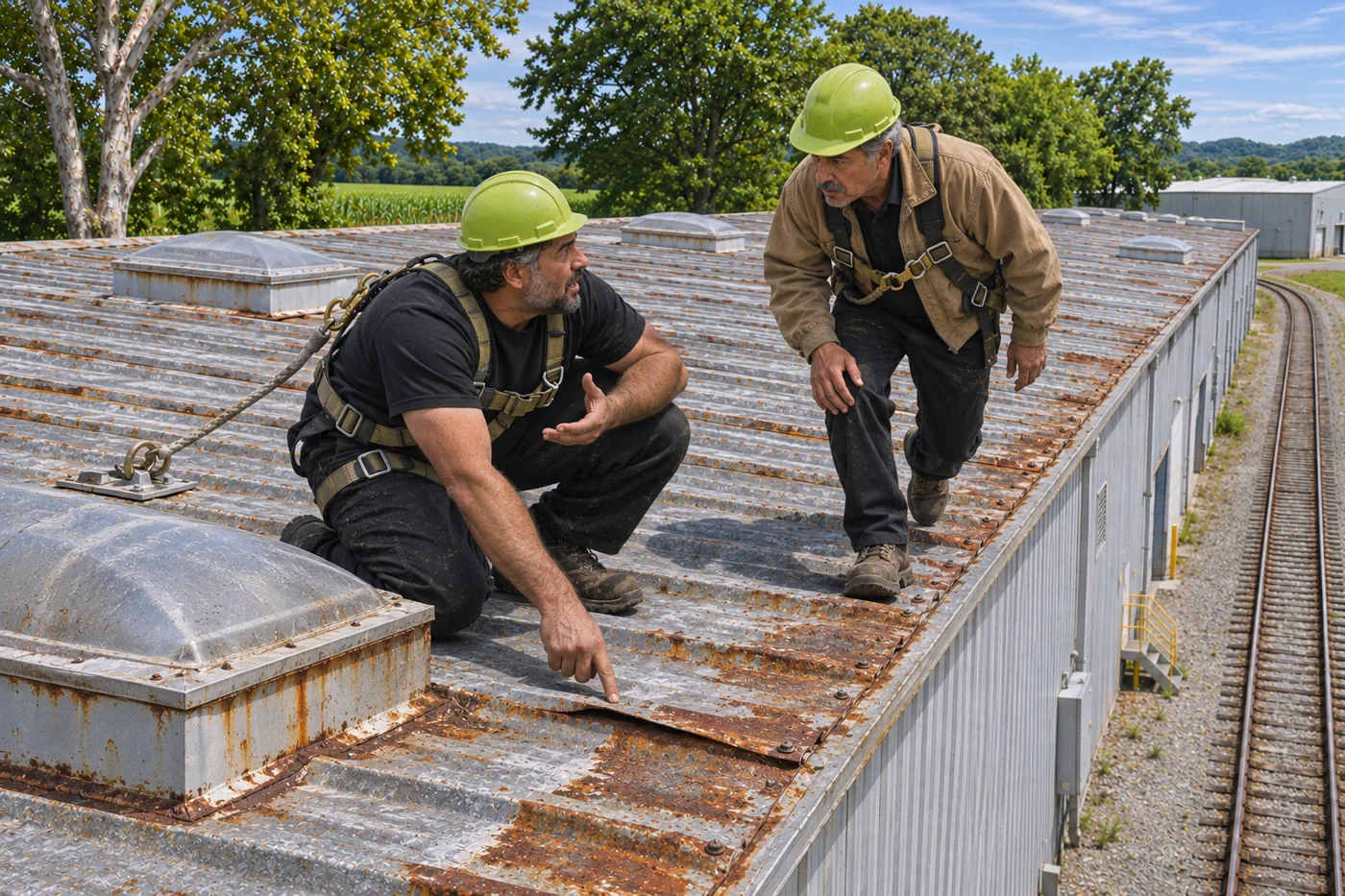
We walk each section, pull-test screws, probe rust at eaves and laps, and photograph curbs and gutters for a marked roof sketch.
Chalk, dirt, and loose paint come off under a pressure washer, so primer and coatings bond to clean steel instead of old film.
Failed screws are swapped, end laps stitched and taped, and curbs detailed with fabric set into a first coat.
Rusted areas are ground to firm steel and primed with a product the coating maker approves for that metal and finish.
Base and top coats go on in measured passes, and the final walk confirms thickness and coverage across the roof.
Parts of a metal property can call for a different system.
Flatter sections of a metal building that hold water for days after storms.
Steeper metal roofs where a lighter, easy-to-recoat system makes sense.
Metal buildings that need insulation added along with a new roof surface.
Shingled office wings or front sections on the same property.
Owners ask these before most steel roof jobs.
Restoration keeps the existing roof in place. We wash it, treat rust, replace failed screws, seal laps, rebuild curb and edge flashings, and then apply a full coating system while the building stays open and working below.
Acrylic fits sloped panels that drain quickly. Silicone fits flatter sections where water sits after rain. A urethane base coat adds toughness near rooftop units that see frequent service traffic, and we pick after checking drainage and foot traffic.
Silicone and urethane systems applied at higher dry film thickness tend to last longest, and many can be recoated later. Any product fails early over dirty or rusty panels, so preparation carries as much weight as the product choice.
Each exposed screw is a possible leak, and washers crack with age. Capping every head with mastic or seam tape adds material where movement and water gather, so the coating stays intact around the screws instead of splitting there.
The planning range is $2.50 to $4.00 per square foot. Rust treatment, the number of screws and laps to seal, panel swaps, roof access, and the chosen system move a roof within that range after the inspection.
Standing seam roofs coat well once lifted seams and loose clips are re-secured and end laps are sealed. Seams still need room to move, so the coating bridges them with fabric at the laps.
Send the roof size and what you see inside, and we will set a roof walk and a written price.