If Your Roof
Ponds Near Drains After Storms
Shallow water that lingers for days near drains and low corners is the job silicone handles best of any coating.
Start WithSilicone Over A Primed Surface
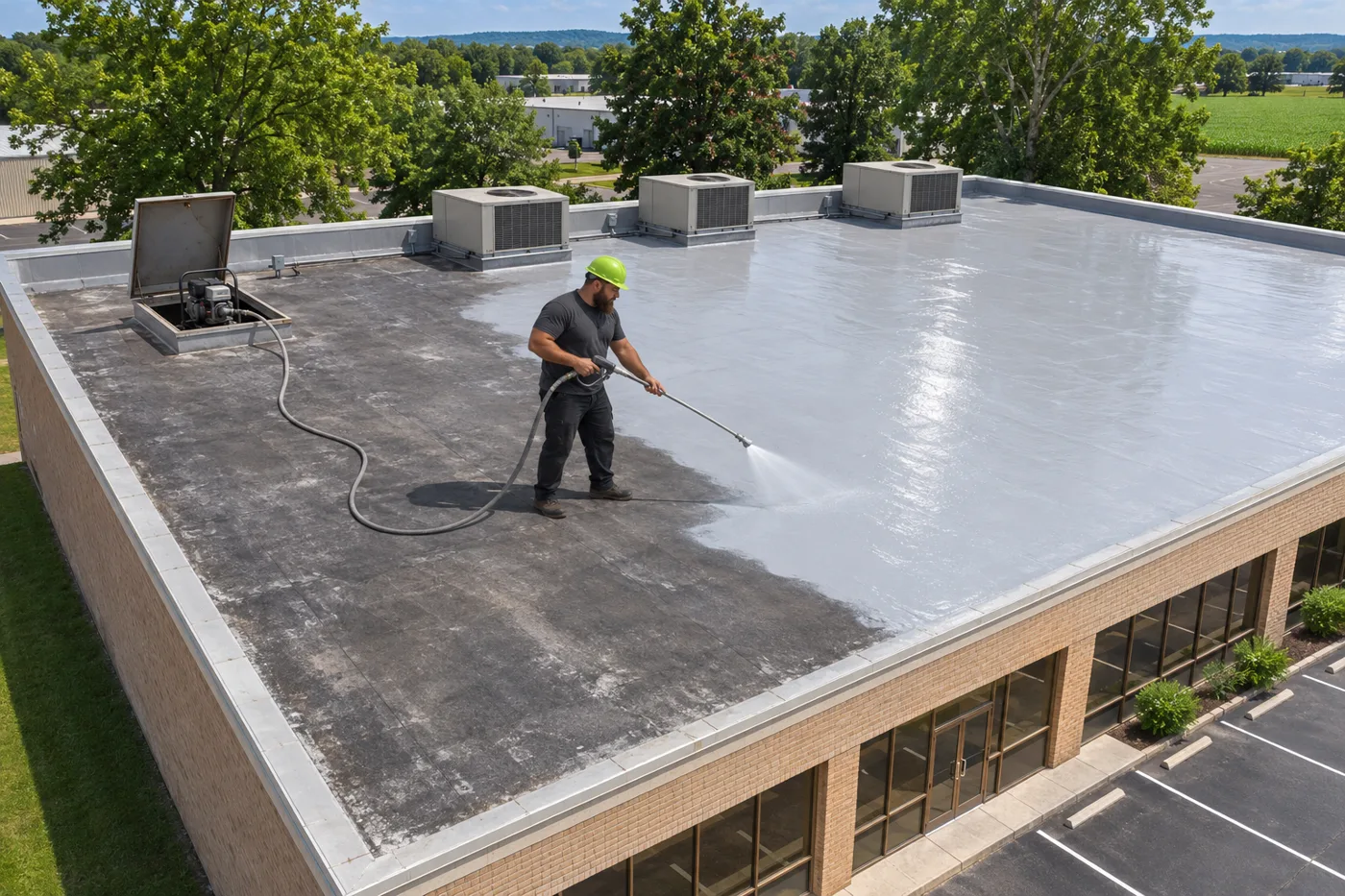
As an Evansville silicone roof coating contractor, we spray silicone over primed metal and single-ply roofs that hold water, after wet insulation is found and replaced.
An Evansville silicone roof coating fits flatter roofs that pond. These cases show when silicone leads and when something else comes first.
Shallow water that lingers for days near drains and low corners is the job silicone handles best of any coating.
Older TPO or EPDM with seams pulling apart over a dry deck takes primer, seam work, and then silicone.
Worn silicone bonds only with more silicone, so a cleaned silicone recoat is the one path forward.
Soaked boards under the water hold moisture against the deck and lift any coating laid above them.
These are the conditions that lead owners to silicone, and what each one gets before spraying.
Sagging purlins, settled decks, and drains set too high leave water sitting for two days or more after rain.
We clear or lower drains where the deck allows, then coat the ponding areas with silicone built for standing water.
Years of summer sun break down older acrylic and paint films until they rub off on your hand.
Chalk is washed away, a bleed-blocking primer goes down where needed, and silicone covers the worn surface.
Shrinking TPO and EPDM pull at seams and flashings, leaving gaps where water wicks under the sheet.
Seams are cleaned, reinforced with compatible tape, and covered with silicone in a wider first pass.
Debris washes toward drains and settles in low spots, holding water and grit against the old surface.
Drain bowls and strainers are cleared, rings scrubbed off, and the drain area gets extra coating thickness.
Water that finds a gap only when it ponds deep points to seams or flashings sitting in the low areas.
Low areas get probed and moisture-tested so the leak source is fixed before silicone covers it.
Silicone leads on flatter roofs that pond. The other systems cover the rest of a property.
| System | Where It Fits | Check First |
|---|---|---|
| Commercial Metal Roof Coating | Steel roofs that need screw, lap, and rust work under the coating | Rust depth before primer |
| Silicone Roof Coating | Low-slope metal or single-ply roofs that hold water after rain | Dry insulation under every puddle |
| Acrylic Roof Coating | Sloped areas that drain within hours | Any old silicone, since acrylic peels off it |
| Spray Foam Roofing | Flat roofs that also need insulation added | Deck dryness and wind on spray days |
| Shingle Roof Coating | Shingled parts of the same building | The shingle maker's guidance |
Here is what a flat section looks like before and after a silicone coat goes on over dry insulation.
Ponding is where silicone earns its place. Call, and we will check what sits under the water before pricing a coat.
Five steps, starting with what sits under the water.
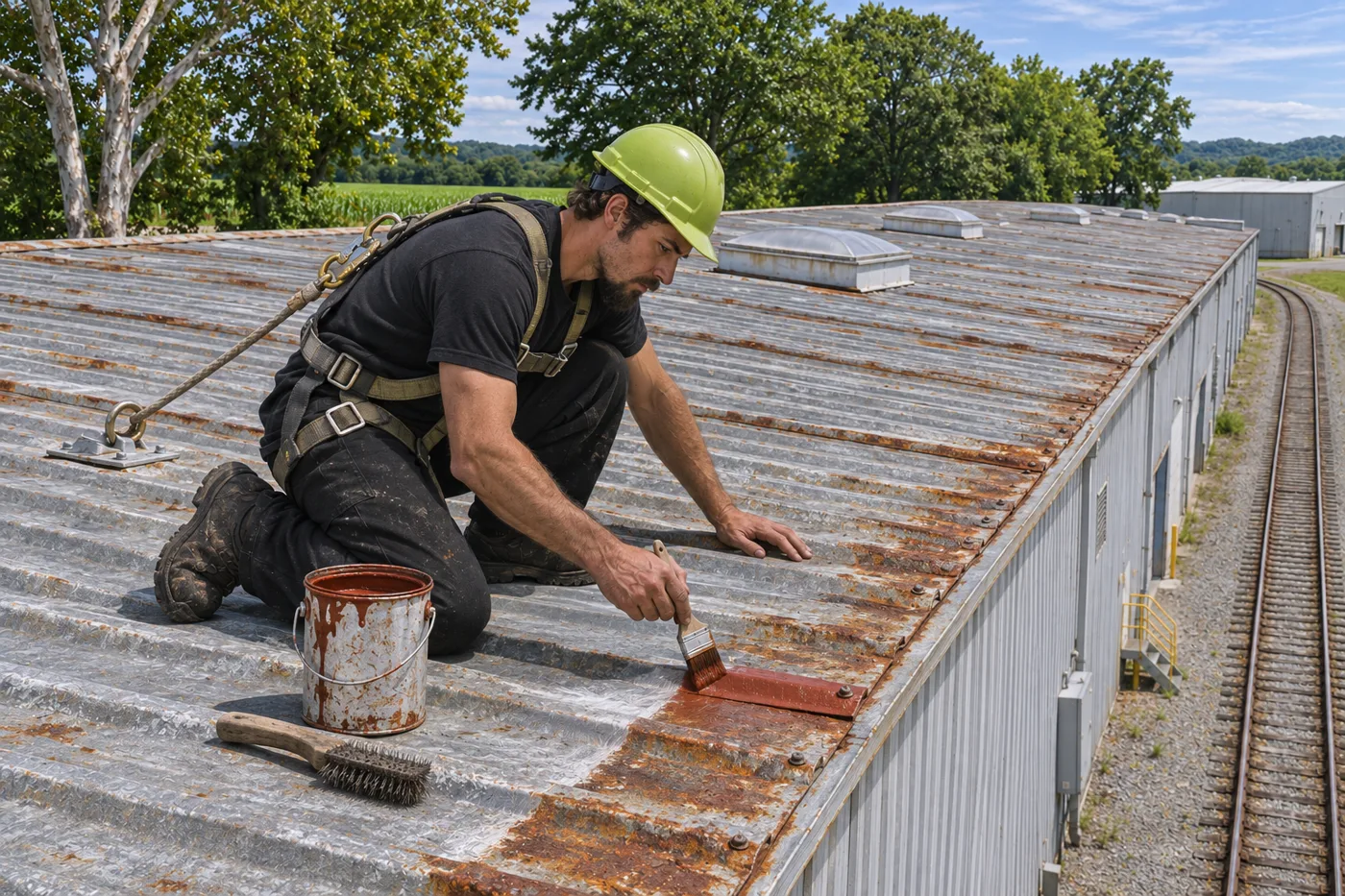
We map ponding areas, core or meter the insulation under them, and check seams, drains, and flashings for open edges.
Soaked sections are cut out and replaced with new board and a matching surface, so the coating sits on dry material.
Washing removes dirt and chalk, and a primer chosen for metal or single-ply goes down wherever the maker requires one.
Seams, drains, and curbs get fabric or tape embedded in a first pass of silicone before the field coat.
The field coat goes on in measured passes, thickest in the low areas, and a final walk checks coverage everywhere.
Steeper or insulated parts of a property can call for another service.
Ribbed steel roofs that need screws, laps, and rust repaired under the coating.
Sloped panels that drain quickly and recoat easily in later years.
Leaky flat roofs over buildings that also need insulation.
Shingled sections over offices or front entries on the same building.
Short answers to the questions silicone jobs raise.
Silicone lasts roughly 10 to 20 years here, set by the thickness sprayed, the prep underneath, and how much foot traffic and debris the roof sees. Summer UV is hard on many coatings, and silicone handles it well.
Low sections that pond and areas in full sun favor silicone. Sloped panels that drain fast favor acrylic, which costs less up front. Mixed-slope plant roofs often take silicone on the flat parts and acrylic elsewhere.
On clean, dry panels primed where rusted and reinforced at seams and screws, silicone stays flexible and resists UV and standing water. Structural damage and wet insulation get repaired before it goes on.
Ponding areas are where silicone gets chosen most, since standing water leaves it intact. Each area must be dry and clean when it is sprayed, and deep ponding from a sagging deck gets corrected first.
Very little bonds to cured silicone except fresh silicone. A silicone roof gets cleaned and recoated with silicone when the time comes.
A silicone surface gets slick with rain, dew, or frost. Walkway pads or granules can go along the paths to rooftop units so service techs keep their footing.
Tell us where water sits on the roof, and we will set a time to check it.