If Your Roof
Leaks Across Most of the Field
Leaks at screws and laps across the whole roof are a better match for one continuous foam layer than spot repairs.
Start WithFoam Over The Existing Panels

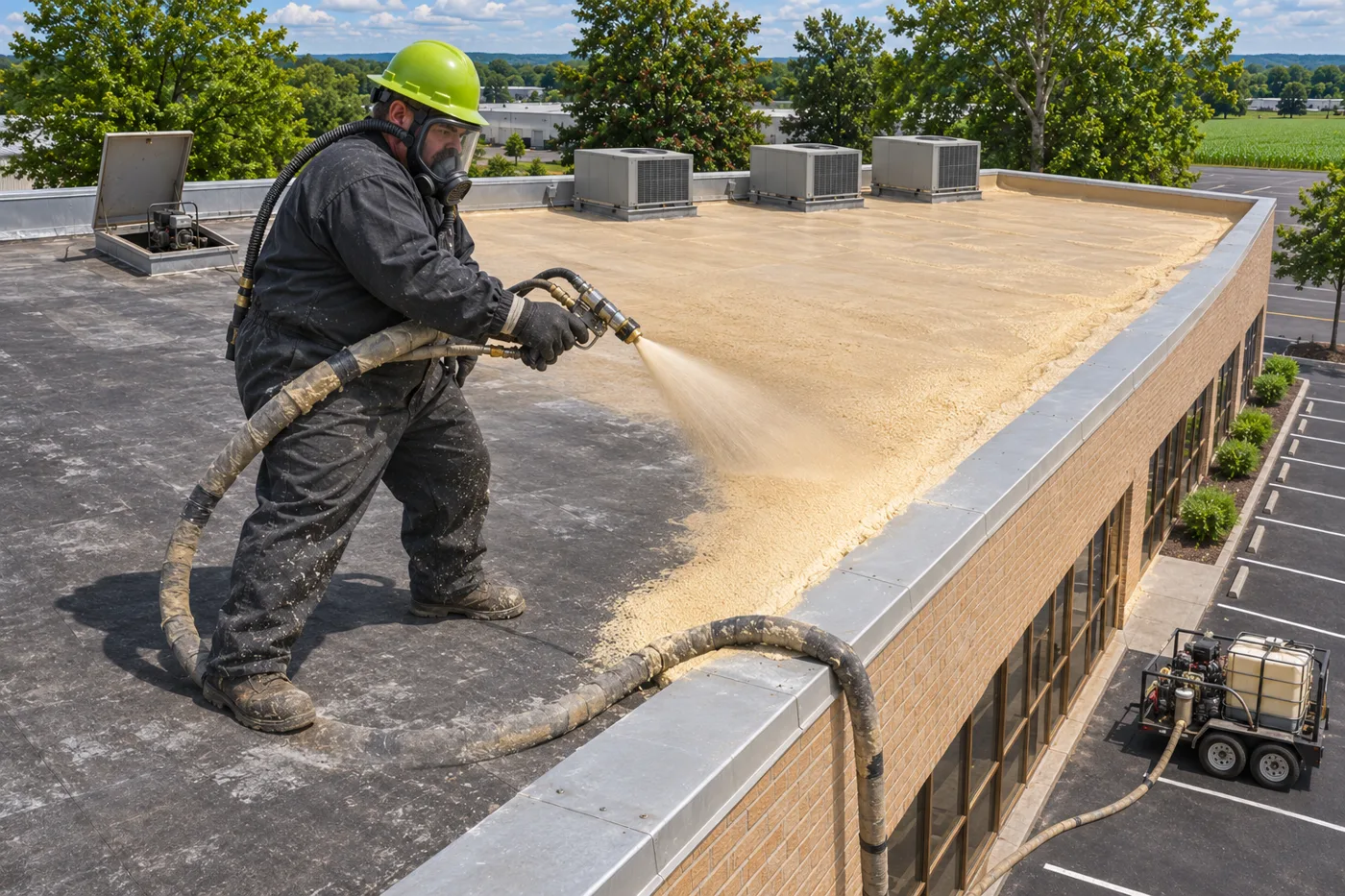
As an Evansville spray foam roofing contractor, we spray closed-cell foam over firm metal and flat roofs, then cover it with a protective coating.
Evansville spray foam roofing fits buildings that leak in many places and need insulation. These cases show where it leads.
Leaks at screws and laps across the whole roof are a better match for one continuous foam layer than spot repairs.
Thin or missing insulation under a metal roof lets summer heat pour into the work floor below.
Foam with a worn topcoat but firm cells underneath takes cleaning, repairs, and a fresh coating.
Water-soaked insulation or a soft deck under the roof has to come out before foam goes down.
Foam solves several roof problems at once. These are the ones that bring owners to it.
Exposed-fastener roofs carry a screw every foot or so, and too many have failed to fix one at a time.
Foam buries every screw and lap under one layer stuck fast to the steel, so they stop being separate leak points.
Bare steel with little insulation passes summer heat and winter cold straight through to the floor below.
An inch or more of closed-cell foam adds insulating value across the whole roof surface.
Thermal movement keeps working laps loose, even after they have been patched more than once.
Foam fills the ribs and covers the laps, tying the panels together into one surface.
Settled decks leave water sitting in places the old roof drained when it was new.
Foam gets sprayed thicker in low areas to build slope back toward the drains.
Sunlight breaks down exposed foam once the protective coating wears thin in spots.
We measure the coat, repair damaged foam, clean the roof, and apply a fresh topcoat.
Drains set high after earlier re-roofs leave a ring of water around each bowl.
Foam is tapered down to each drain so water reaches the bowl instead of sitting around it.
Foam is one of five systems. The table shows where each one fits on Evansville roofs.
| System | Where It Fits | Check First |
|---|---|---|
| Commercial Metal Roof Coating | Steel roofs with firm panels and moderate leaks | Screw grip and lap gaps |
| Silicone Roof Coating | Flatter roofs that pond but already have enough insulation | Moisture under the ponding |
| Acrylic Roof Coating | Sloped roofs that drain well | A weather window for each coat |
| Spray Foam Roofing | Leaky roofs over hot or cold buildings | Wind, intakes, and parked cars |
| Shingle Roof Coating | Shingled wings on the same property | Shingle condition |
Here is what changes when foam and a coating go over a leaky metal roof.
That pairing is where foam fits best. Call, and we will check the deck and price foam against the other options.
Five steps, with weather and overspray control built in.
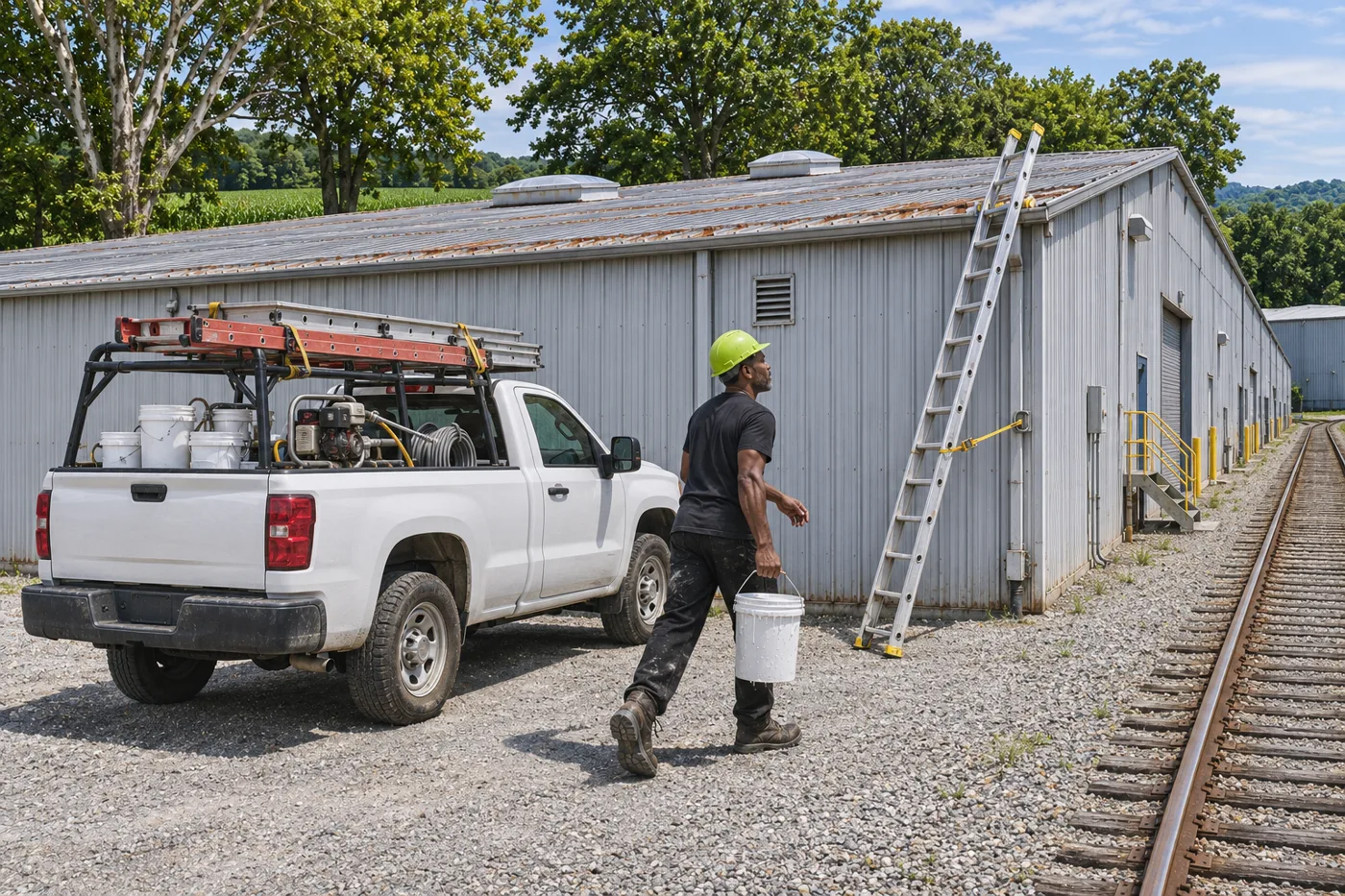
We check the deck for soft spots, test insulation for moisture, and note air intakes, parked cars, and neighbors near the roof.
Loose panels are fastened, rust is treated, and the surface is cleaned and dried so the foam bonds.
Intakes are closed or covered, nearby cars are moved, and spraying waits for calm air over the roof.
Closed-cell foam goes on in lifts to the planned thickness, built up in low areas for drainage.
A protective coating covers the foam within the window the maker sets, and a final walk confirms coverage.
Roofs that need no added insulation can do better with coating alone.
Steel roofs with firm panels where screw and lap repair plus coating is enough.
Flat roofs that pond but already have dry, adequate insulation.
Sloped panels that drain fast and need a fresh surface.
Shingled sections over offices on the same property.
Answers on foam before you decide.
We measure the old coating thickness, look for exposed or damaged foam, clean the roof, repair punctures, and spray a fresh protective coat. Recoating on schedule keeps sunlight and water off the foam.
On the plus side, foam is light, continuous, adds insulation, seals around penetrations, and can build slope. On the minus side, it needs dry, mild weather, careful overspray control, and a topcoat renewed over the years.
Installation relies on the weather and a skilled applicator for even thickness. Birds, hail, and sharp tools can puncture it, and leaks under the coating can take work to trace. Twice-yearly walks catch most of this early.
Foam bonds to clean, primed metal and fills the ribs into a continuous surface over laps and screws. Loose panels get fastened and rust treated first, and a protective coating goes on over the foam.
Thickness is set by the insulation the building needs and the slope to build, starting around an inch and going thicker in low areas.
Intakes get closed, cars get moved, and spraying waits for calm air. Occupied buildings stay open while we work on the roof above.
Closed-cell foam weighs far less than a new layer of metal or a tear-off and re-roof, which helps on older buildings with light framing.
Tell us how the building feels inside and where it leaks, and we will check whether foam fits.